By Lisa Minjares-Kyle
In my first post to this series, I explained that health and traffic safety go hand in hand. In this post, we are going to apply some of the basic principles of a health theory known as the Theory of Planned Behavior to help guide our understanding of what can help motivate people to change their behavior and use this as a stepping stone into further exploration of what each construct means.
Researchers have incorporated this model in various studies exploring road safety interventions (1), determining behavior and compliance of truck drivers (2), and many experts agree that roadway behaviors are impacted by several factors outside the vehicle such as social or economic factors that shape people’s health and behavior (3).
Ultimately, the goal of this series is to go deeper into some of the why’s and what’s that motivate people to change and how this information can help you plan your activities, campaigns, and outreach to be better informed and thus more effective among your peers.
Theory of Planned Behavior – in a nutshell.
The core thought behind the theory is that a person’s behavior can be determined by their “intention to change.” A person’s intention to change is formed by three main constructs: Attitude, Subjective Norm, and Perceived Control.
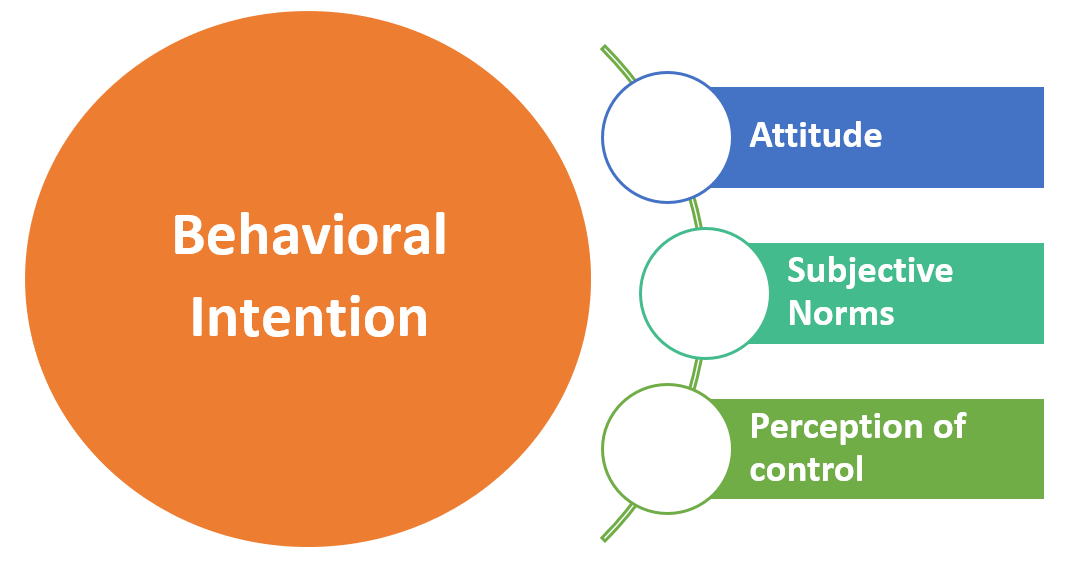
In short, this theory explores how our attitude can be influenced by our values and beliefs regarding the new behavior we are being asked to adopt. For example, what are someone’s beliefs about not texting while driving and if they were to stop, what value would they place on the outcome of that change?
Subjective norms are based on our perception of what the significant people in our life want us to do or not do. What do you think your parents want you to do when it comes to wearing a seat belt in the back seat? Do you value their opinions?
Lastly, perceived control asks us how difficult do we perceive this change to be and what are some things that may help or hinder us to make that change?
In the upcoming articles, we are going to dive into each construct, talk about why they’re important and how you identify them, and share some activities that show these constructs in action. Until next time, continue to think about your own experiences and keep working to help your peers make better choices in and out of the car.
References:
- Poulter, D.R., P. Chapman, P.A. Bibby, D. D. Clarke & D. Crundall (2008). An Application of theory of planned behavior to truck driving behavior and compliance with regulations. Accident analysis and Prevention 40, 2058-2064.
- Poulter, D.R., & F.P. McKenna (2010). Evaluating the effectiveness of a road safety education intervention for pre-drivers: An application of the theory of planned behavior. British Journal of Educational Psychology, 80, 163-181
- Nicola Christie (2018). Why we need to view road safety through a public health lens?, Transport Reviews, 38:2, 139-141, DOI: 10.1080/01441647.2018.1411226
 Ms. Minjares-Kyle is an Associate Transportation Researcher under the Youth Transportation Safety Program at the Texas A&M Transportation Institute (TTI). Her primary area of expertise involves research, development of educational materials, and outreach pertaining to young drivers. Topics of interest include: distracted driving, impaired driving, child passenger safety, peer-to-peer outreach and data analysis.
Leave a Reply